Jan 16, 2026
Moving beyond CDE: How Speckle extends ACC into a universal data platform
If Autodesk Construction Cloud is where you publish, file, and manage project data, this isn’t a story about replacing it or switching platforms. The new bid is already waiting, and there’s no time for that kind of uproot.
Speckle unlocks the dormant data you store in Autodesk Construction Cloud (ACC) and makes it understandable, explorable, shareable, and ready to become a market advantage at both the project and portfolio-levels. In short, it’s time to take all the valuable project information stored in your system of record and put it to work in a system of action.
Keep reading to learn how this integration can finally move the needle on your ability to analyze data across projects and maximize the value your organization derives from ACC.
ACC is a given. And then what?
ACC capabilities often come bundled with the Autodesk tools teams already use, and before long, it becomes the default location for storing projects in the cloud. It’s about convenience, and reflects ACC's role as a dependable system for storing, governing, and coordinating project information. In some cases, it may even be mandated as a project’s official CDE.
ACC and other project-centric CDEs, such as Oracle’s Aconex and Bentley’s ProjectWise, are essential tools for project governance. They offer robust approval processes and controls to help you meet standards such as ISO 19650. But increasingly, AEC firms are recognizing that the control CDEs offer also has a downside: once information is uploaded to a CDE, it becomes inaccessible and siloed. When coordination is running smoothly, and deliverables and models are moving through ACC as expected, the questions change. People stop worrying about where files live and start asking what else can be done with the data inside them.
Can we look across projects? Can we automate checks? Can we connect this to other tools without making everything a manual export? These are the questions we at Speckle wanted to answer for you.
When one system is asked to do too much
ACC is being asked to do two very different jobs at once. On the one hand, it’s a governed system of record, designed for control, permissions, and stability. On the other hand, teams increasingly want it to behave like a flexible data platform, supporting analytics, automation, reporting, and integration with tools that sit well outside the core delivery workflow.
For most teams, the signs are familiar. Exports become routine. Models get duplicated. Spreadsheets appear to fill gaps. Small scripts and services quietly hold workflows together behind the scenes.
ACC remains central, but it’s no longer sufficient on its own. That isn’t a failure; it’s simply a sign that the scope has expanded, and you should look beyond for a solution that positions you for the future. AEC is in dire need of a scalable, enterprise-grade data infrastructure.
What “beyond CDE” means in practice
This is where a post-CDE approach makes sense. It doesn’t mean abandoning systems of record or ripping out existing platforms. It’s about separating responsibilities and clarifying what each part of the stack is well-suited to, rather than forcing a single system to carry the full burden of downstream data use.
In practice, that separation is very straightforward:
- A project’s CDE, such as ACC, continues to govern projects, control access, and serve as the operational backbone that teams already rely on.
- Models and documents are published and managed there because that’s where accountability lives.
- Speckle, as a data layer purpose-built for AEC, sits alongside ACC, treating the data flowing through ACC as accessible, reusable, and extensible without being dragged back through the platform every time a change takes place or a new question needs answering.
The shift here isn’t about changing workflows; it’s architectural. Instead of expecting a single platform to serve as the system of record, analytics engine, automation layer, and integration hub, those roles are deliberately split. The system of record stays stable and controlled, while your new open data layer becomes flexible, queryable, and adaptable.
That’s why Speckle isn’t looking to replace ACC to enhance its utility. Instead, Speckle’s data layer expands what’s possible with the data that already flows through ACC. And once that pattern is in place, it doesn’t stop there. The same approach applies to other project backbones too, whether that’s ProjectWise or something else entirely.
The industry's most data-mature firms have already recognized this paradigm shift and moved beyond the inflexible, project-based silos of traditional CDEs. They understand that future competitive advantage will come from analyzing and automating project data at scale, shifting from project-based to portfolio-based intelligence.
This portfolio approach reveals patterns that individual projects can't: Which design configurations consistently cause delays? What schedules deliver the best outcomes? Which material choices perform reliably across different contexts? These insights only emerge when data flows freely across projects.
The critical limitation of today's CDEs is that data remains trapped; it can't be extracted and connected with other systems in a timely, automated way. This is where purpose-built AEC data infrastructure comes in: platforms designed specifically to liberate project data and make it queryable, connectable, and actionable across your entire portfolio.
CDE tools can remain opinionated and governed, while data remains open to broader use, which is ultimately what a post-CDE approach aims to achieve.
Unlock the value of the information stored in your system of record in Speckle’s system of action.
Where the value shows up day-to-day
The value of using Speckle with ACC shows up in fairly ordinary situations. When someone asks for a cross-project view of model health, quantities, or progress, the answer doesn’t have to involve exporting multiple files or rebuilding the same logic.
With Speckle, data published to ACC can be accessed once and reused consistently, without duplicating effort or creating parallel sources of truth.
Speckle + ACC: automated QA and compliance at scale
Quality checks tend to degrade under repetition. Even with ACC in place, QA logic is often redefined per project, run manually, and recorded in formats that don’t age well. Results become snapshots rather than signals. Using Speckle alongside ACC changes that pattern.
Subscribe to receive news and workflows your team can use to unlock the full potential of ACC data and generate business value.
Teams can now:
- Define QA and compliance rules once.
- Run them automatically against models published to ACC.
- Re-run the same checks as models evolve, without re-exporting or rebuilding pipelines.
- Track results over time and across projects.
The outcome is not just faster checking, but more consistent checking. ACC remains the place where models are coordinated and approved. Speckle becomes the home for QA logic, where it lives, persists, and scales.
Get ACC integration updates first and turn your inbox into a driver of growth!
Speckle + ACC = Intelligent insights for your portfolio
The same applies when teams want dashboards, reporting, or automation that sit outside the project delivery environment.
Speckle provides direct access to AEC data in analytics and BI tools without running into token limits, throttled APIs, or platform-specific representations. The data remains connected to its source, but the workflows don’t have to live inside the CDE itself.
ACC is organised around projects. That works well for delivery, but it makes cross-project questions harder to answer.
Using Speckle alongside ACC allows teams to step back from individual projects and view the portfolio without rebuilding logic each time.
Teams can now:
- Aggregate model data from multiple ACC projects into a single analytical view.
- Track quantities, model health, progress, or metadata consistency across programmes. Feed that data directly into tools like Power BI, Tableau, or custom dashboards.
Instead of exporting spreadsheets or recreating reports per project, analysis logic lives once and runs everywhere. ACC continues to host and govern the data. Speckle makes it comparable.
This becomes even more relevant when collaboration extends beyond Autodesk-native tools. Many projects already span Rhino, Archicad, Tekla, scripting environments, game engines, or custom applications.
Speckle enables those tools to work with the same underlying data without forcing everything through a single vendor boundary or flattening models into lowest-common-denominator formats, which often erodes fidelity and intent.
Speckle + ACC: data consumption beyond vendor boundaries
Most organisations already rely on tools that sit outside any single vendor ecosystem.
Visualisation platforms, scripting environments, analytics tools, digital twins, game engines, and bespoke services increasingly need access to the same data flowing through ACC. Speckle enables that access without requiring everything to be routed back through the CDE.
Teams can:
- Consume ACC data in Rhino, Grasshopper, Archicad, Power BI, or custom applications.
- Work with structured data rather than flattened exports.
- Integrate external tools without reshaping workflows around a single platform’s API model.
This keeps downstream innovation flexible. ACC continues to govern project delivery. Speckle ensures the data moving through it can be used wherever value is created next.
Speckle + ACC = AI readiness
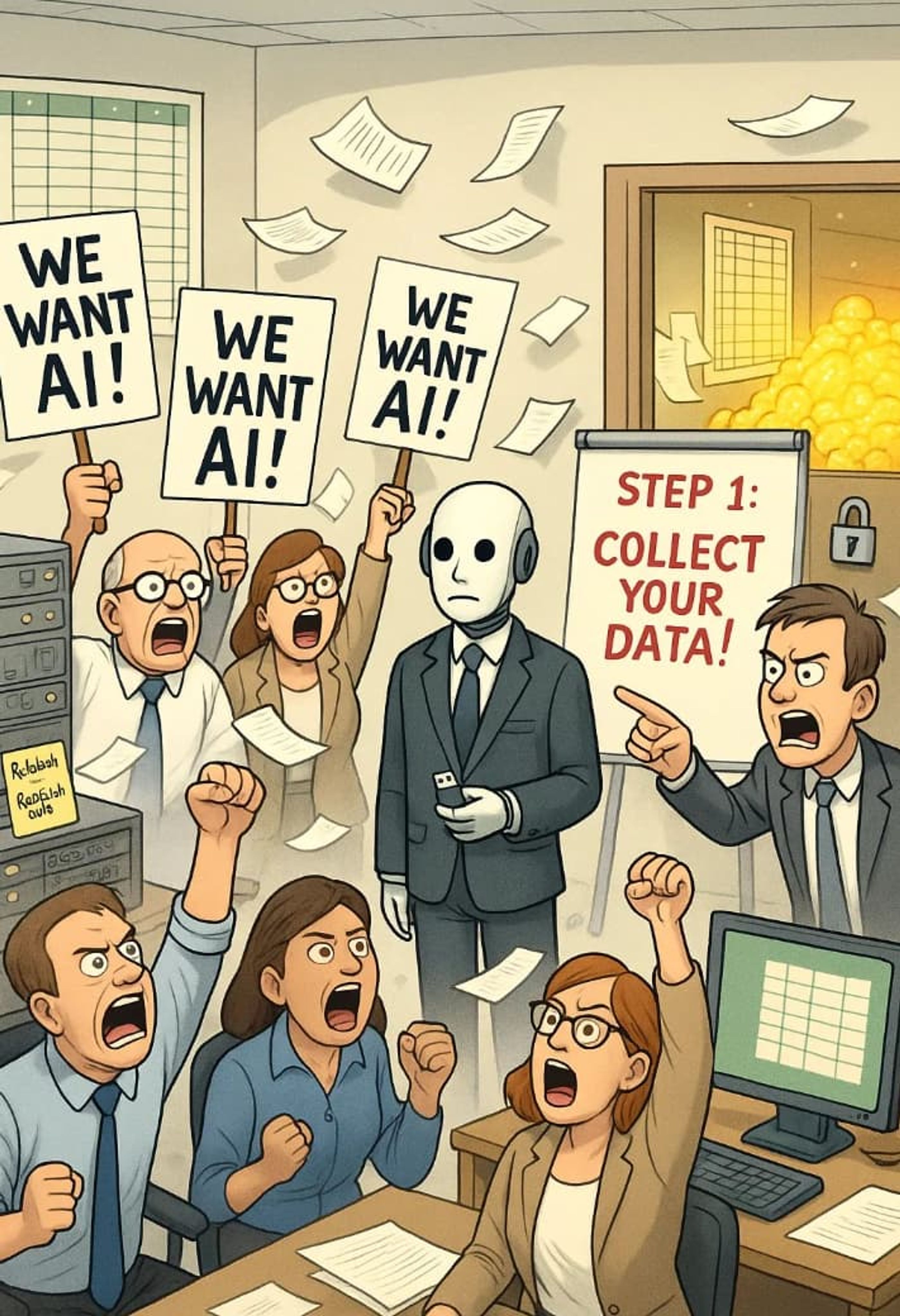
A less visible but essential effect is what teams are actually allowed to do with their own data.
With Speckle, there are no tokens to manage and no restrictions on downstream use, which means analytics, automation, and machine-learning workflows can be built directly on top of project data without negotiating access or working around licensing constraints.
Most teams already have more data than they know what to do with. The blocker is rarely available; it’s access.
Using Speckle alongside ACC allows teams to work directly with project data without negotiating API limits, managing tokens, or reshaping workflows to fit licensing constraints.
Practically, this means:
- Publishing models to ACC as usual.
- Using Speckle to expose that same data through unmetered APIs.
- Training, testing, or running machine-learning workflows directly on live project data, not exported snapshots.
ACC remains the governed system of record. Speckle provides a stable, repeatable way to access that data for experimentation, analytics, and ML without introducing brittle workarounds.
This is not about speculative AI or rushing into unvalidated processes. It’s about making your existing project data usable when teams are ready to apply it.
Unlock the value of the information stored in your system of record in Speckle’s system of action.
Speckle for ACC: The fast track for getting to the value
The first bit of great news is that your team doesn’t need to change its delivery workflow to adopt Speckle.
You continue publishing models to ACC exactly as you do today. The change happens alongside, not instead of, existing processes.
Your starting journey looks like this:
- Keep ACC as the primary project CDE and system of record.
- Connect Speckle to selected projects or models where additional access is needed.
- Start with one downstream use case: analytics, QA, automation, or external integration.
- Expand only when the value is clear.
There’s no migration, no parallel CDE, and no requirement to standardise everything up front. The result is that most organisations start small and scale their architecture as needed.
What about Autodesk Data Exchange?
Data Exchange enables the controlled sharing of defined subsets of model data, primarily within Autodesk-managed workflows. It’s useful for specific, scoped exchanges.
Speckle takes a broader approach: open, unmetered access to your data for analytics, automation, and reuse across tools and platforms.
Platforms change; data shouldn’t have to
One quiet reality of AEC platforms is that they evolve constantly. Names change, boundaries shift, and capabilities are added, re-scoped, or bundled in new ways. That, in itself, isn’t a problem; it’s the natural behaviour of large software ecosystems.
The risk arises when project data becomes tightly coupled to those shifts, because every platform change then ripples through day-to-day workflows.
When a single system is treated as both the system of record and the only place where data can be meaningfully accessed, teams tend to adapt in predictable ways. Exports multiply, models are duplicated, and bespoke glue code keeps workflows moving. Over time, the platform remains central, but the cost of adapting around it steadily increases, even as the underlying intent stays the same.
A post-CDE approach absorbs that change rather than amplifying it. Using Speckle alongside ACC makes ACC more usable without undermining its role as a governed system of record, while also establishing a pattern that isn’t tied to any single vendor or platform. The same approach applies as workflows extend to other systems that serve as project backbones, such as ProjectWise or any comparable environment.
The point isn’t to predict which platform will matter most in five years; it’s to avoid having to care. ACC often arrives by default or perhaps by client mandate. In contrast, Speckle comes by choice, when teams want their data to remain accessible, (re)usable, and genuinely their own, regardless of how platforms evolve.
Get ACC integration updates first and turn your inbox into a driver of growth!

Jonathon Broughton
Advocacy and Developer Relations