Pomerleau achieves 90% faster equipment tracking and QA/QC checks with Speckle-powered tools
Company
Pomerleau is a leading Canadian construction company recognized for delivering complex building and infrastructure projects through innovation and collaboration. Founded in 1966, the company integrates digital technologies, sustainability, and new ways of working to rethink how the built environment is designed and delivered. This innovation-driven approach positions Pomerleau as an active contributor to global conversations around open data and platforms such as Speckle.
Challenge
Major projects are increasingly confronted with structural challenges stemming from fragmented data ecosystems, strong reliance on proprietary platforms, and inefficient manual workflows. Project information is typically dispersed across multiple tools, environments, and license models, resulting in higher costs, reduced interoperability, and limited capacity to access, transform, and reuse data at scale.
Beyond the technological fragmentation, teams dedicate a disproportionate amount of time to low-value, repetitive activities—such as data cleansing and structuring, georeferencing alignment, model federation, and version comparison. These tasks, while necessary, do not directly contribute to design or delivery quality, yet they significantly slow down production cycles and increase the risk of inconsistency.
At the same time, maintaining data integrity, traceability, and consistency across disciplines, stakeholders, and project phases remains a complex governance challenge. Without structured and reliable information flows, it becomes difficult to feed operational dashboards with trustworthy data, automate quality controls, or support decision-making with real-time insights. The result is a gap between the potential of digital tools and the actual value extracted from project information.
Solution
To address these structural constraints, Speckle was implemented as an open 3D data platform serving as a centralized, technology-agnostic information backbone.
By reducing dependence on closed, license-intensive ecosystems, it provides a shared and interoperable data environment where project information can be consolidated, structured, and governed more efficiently.
As a unified data layer, Speckle enables teams to ingest, segment, transform, and redistribute datasets across disciplines and project phases without duplicating effort or multiplying software dependencies. Instead of treating models as static deliverables, information becomes dynamic, queryable, and reusable. This shift enables the development of purpose-built applications directly on top of the shared data foundation, transforming previously manual workflows—such as georeferencing alignment, model preparation, dataset normalization, and version comparison—into automated, repeatable processes.
In parallel, the platform enhances quality control and assurance by enabling structured comparisons between model versions and across projects, ensuring traceability and consistency of information.
By standardizing and validating incoming datasets before they feed reporting environments, Speckle strengthens data governance and improves the reliability of operational dashboards. The result is a scalable digital framework that not only optimizes production workflows but also supports informed, data-driven decision-making at the program and portfolio level.
How they did it
At Pomerleau, the deployment has been approached as a structured transformation program rather than a fully completed production rollout. The platform is not yet in full production across all projects; instead, it is currently being progressively deployed while governance standards, workflows, and technical protocols are still being formalized and documented.
The strategic decision was to position Speckle as a complementary data backbone integrated with Autodesk Construction Cloud and existing BIM ecosystems, minimizing disruption while enabling gradual adoption. A phased rollout strategy has been adopted, beginning with controlled pilot projects to validate synchronization logic, folder structures, version control mechanisms, and QA/QC automation before wider scaling.
Dedicated ACC folder structures for publish-ready models have been defined, along with controlled versioning workflows and secure, token-based authentication connected to the corporate hub. At the same time, enterprise standards—such as property set normalization, naming conventions, metadata structures, and validation rules—are actively being written and refined. This ensures that the deployment is not only technically functional but aligned with long-term governance and IT compliance objectives.
Custom applications are being centralized and standardized to avoid fragmented local scripts, but their evolution remains iterative. Feedback loops from pilot projects are directly influencing the development of internal standards and automation tools.
By combining controlled implementation, incremental scaling, and active governance, Pomerleau is building a scalable and secure digital framework—one designed for full production maturity but currently in a deliberate, structured deployment phase.
Streamlining BIM/VDC workflows
Automated visualization and validation of specialized equipment
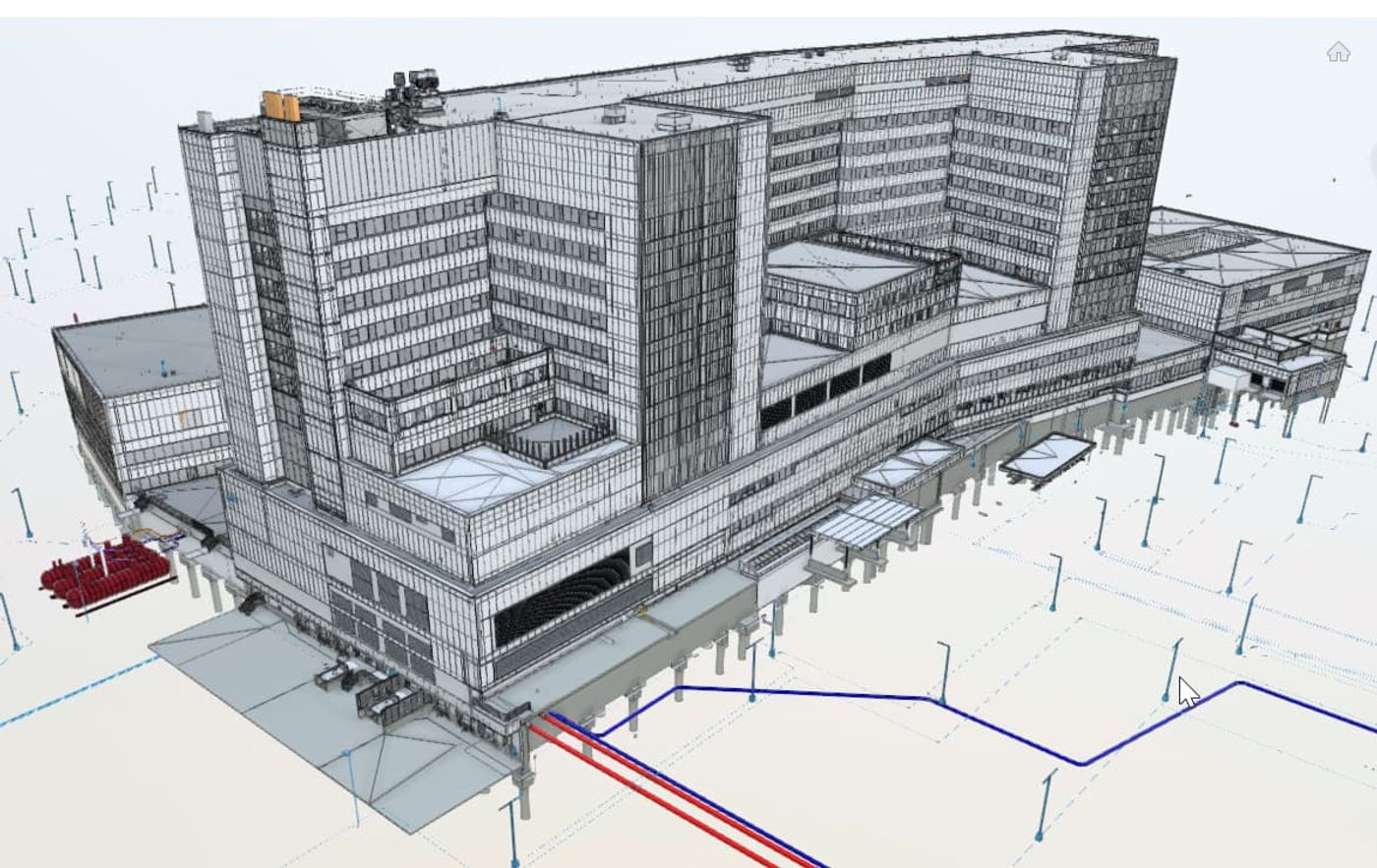
On a large, complex institutional healthcare project in Quebec, project teams needed a reliable way to understand and validate specialized equipment data coming from multiple sources—Revit models, dRofus, and Documatic—against monthly client‑issued equipment lists.
As these datasets evolved independently, tracking whether updated equipment was correctly reflected in professional models became increasingly difficult using traditional, document‑based workflows.
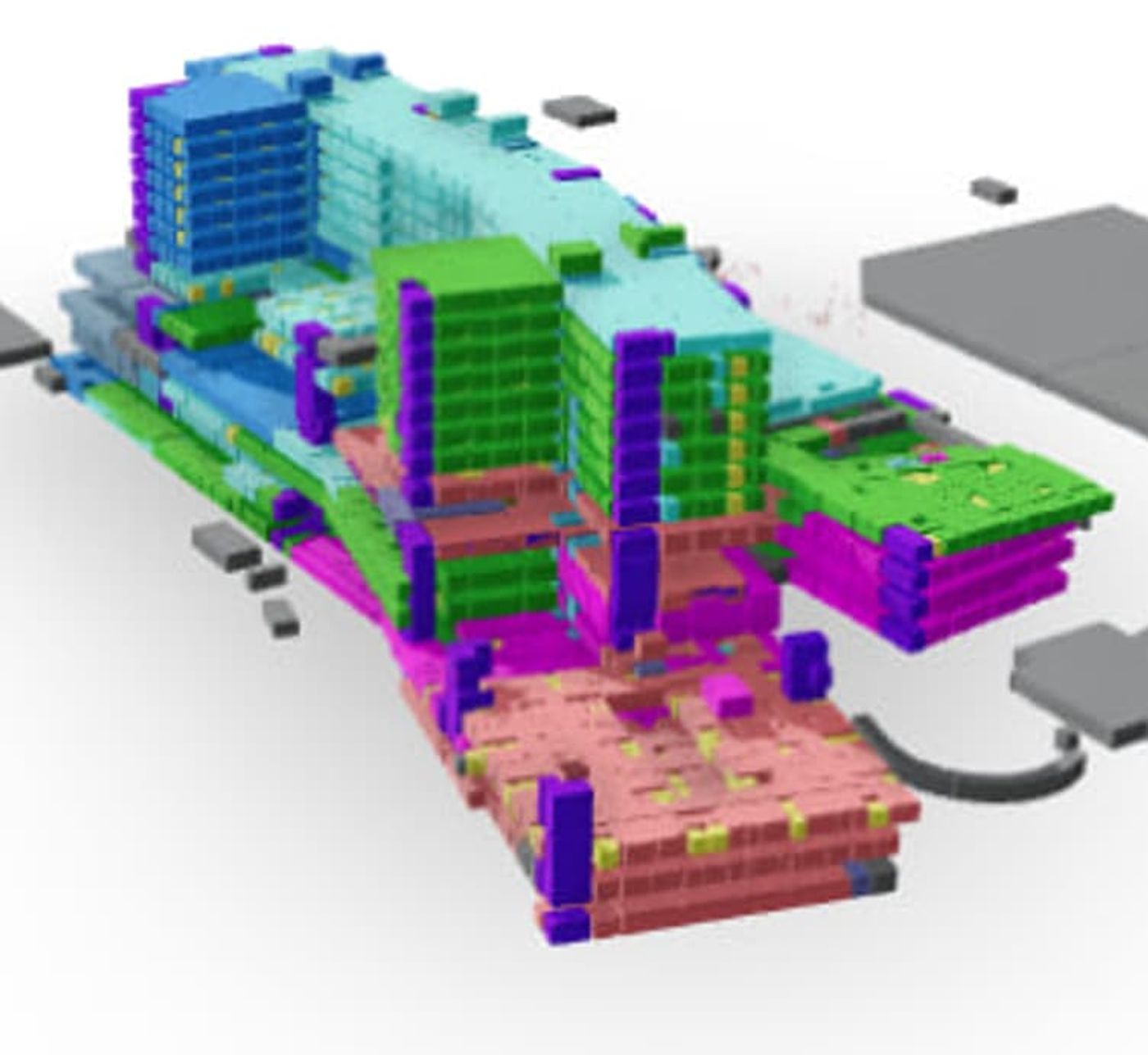
A Speckle‑based solution was developed primarily to visualize and align 2–3 datasets simultaneously, making discrepancies in approximately 59,000 specialized equipment items, 6,700 rooms, and 12 building levels easier to interpret.
Rather than fully automating decisions, the platform supported teams by highlighting differences between data sources and providing a clear, consolidated view for human validation. This significantly reduced the effort required to review updates, shortening validation cycles from approximately two weeks to just two hours, including manual checks.
Model-based QTO and data visualization
Rather than focusing solely on automated, model‑based quantity takeoffs, Speckle was used as a data visualization layer to support quantity tracking and model alignment across multiple phases of the project—from proposal and design through construction.
Quantities and equipment data coming from mechanical and electrical models were aggregated and visualized by room and system, allowing different teams to interpret, validate, and compare information in context.
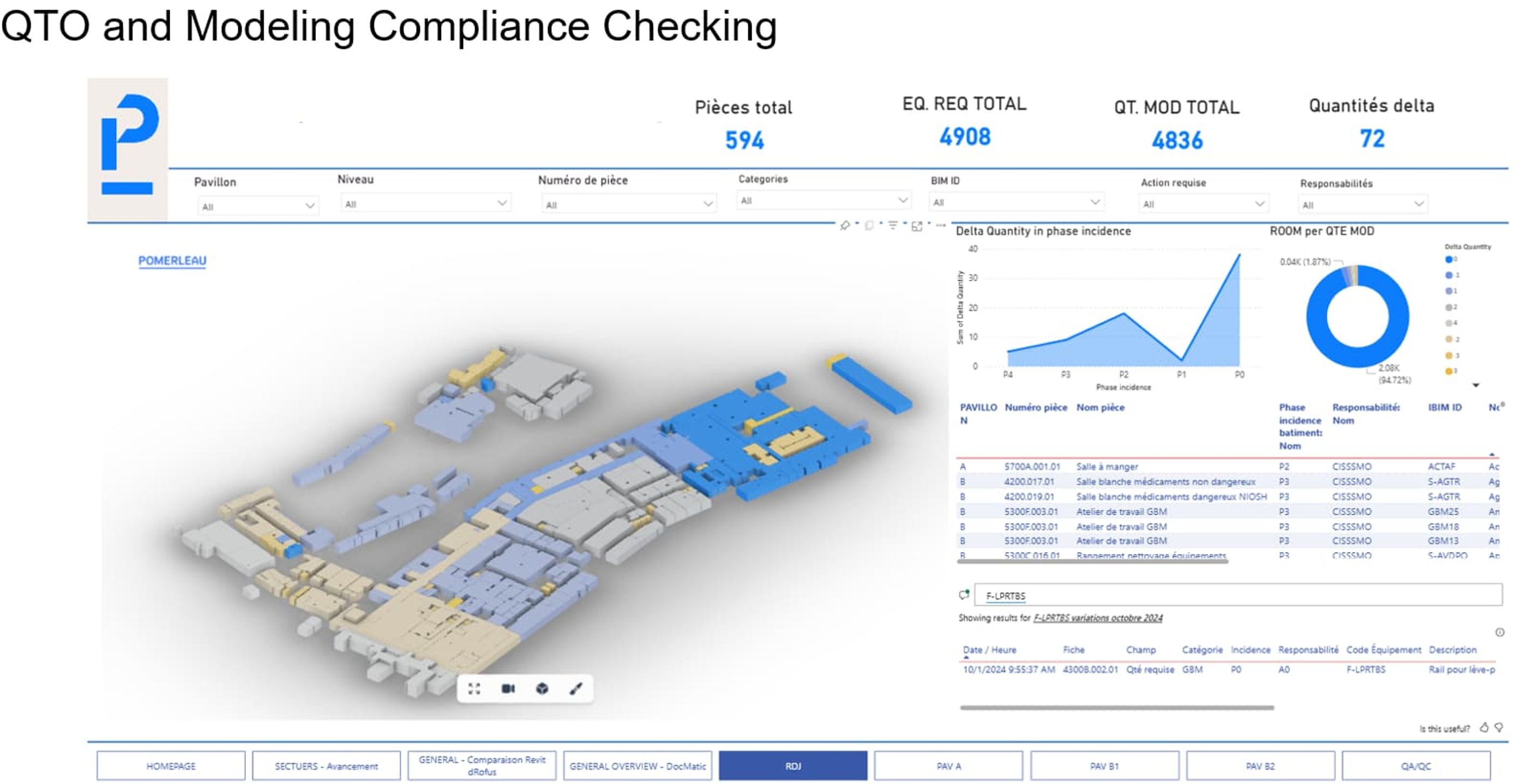
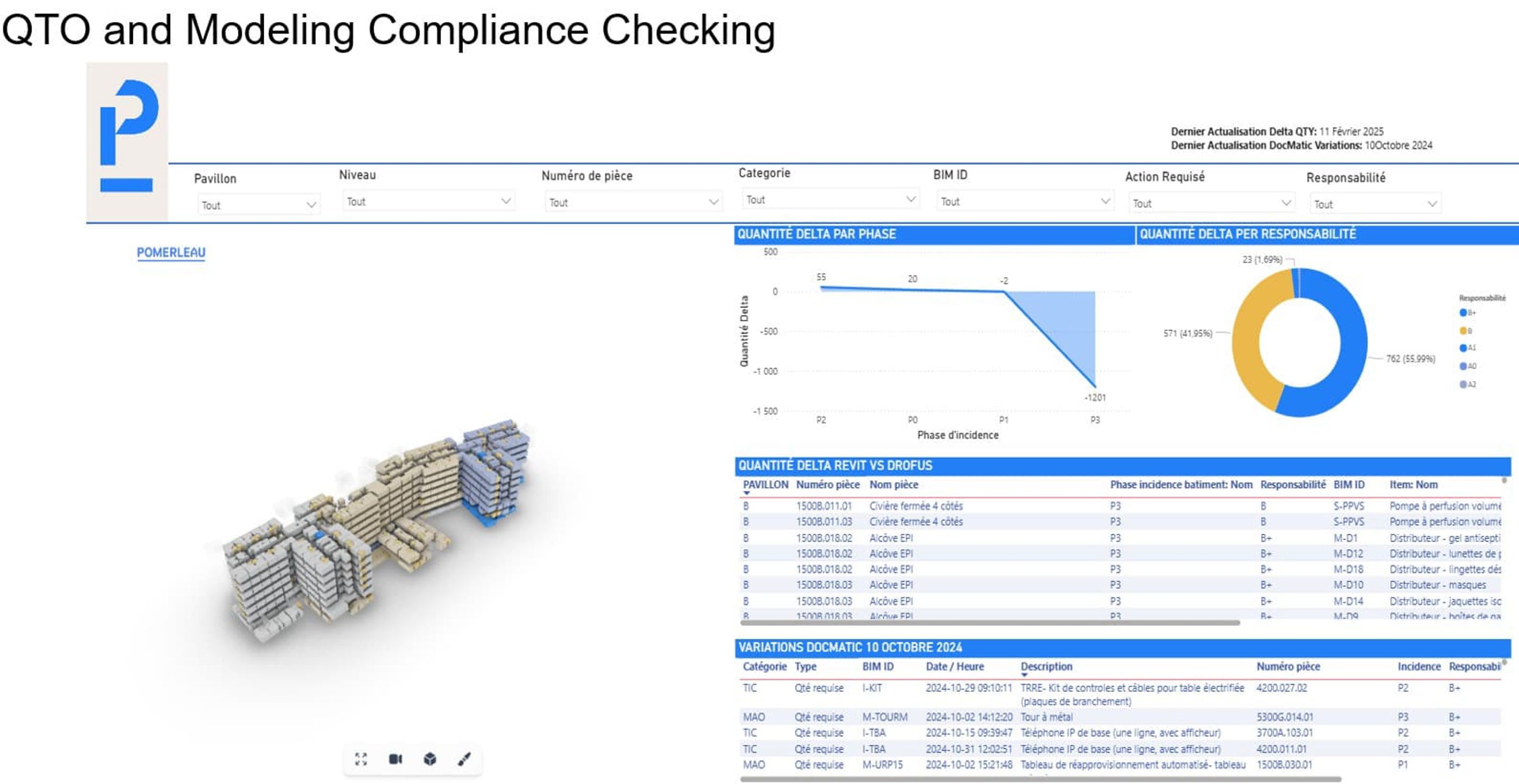
This approach helped identify gaps, inconsistencies, and modeling deviations early, while supporting QA/QC workflows without replacing professional judgment.
By making QTO data more accessible and understandable to a broader set of stakeholders, the platform supported informed decision‑making and reduced reliance on manual spreadsheets throughout the project lifecycle
Construction progress visualization through data integration
Rather than fully automating 4D planning, Speckle was used to connect the detailed construction schedule from Pomerleau’s internal planning system (PlaniPOM) with model data to visualize work progress on site.
Information from these two data sources was overlaid to provide a clear, visual representation of the status of selected construction items directly in the model.
Task status—such as completed, on schedule, late, or delayed—was communicated through color coding, with visibility into the extent of each delay. This approach supported teams by making schedule information easier to interpret spatially, helping them understand progress, identify issues, and support on-site discussions and decision‑making.
A suite of purpose-built tools
A suite of purpose-built tools powered by Speckle was progressively developed to support this strategy. Rather than relying on generic, off-the-shelf workflows, these applications were designed to address specific pain points across active projects—particularly in IFC processing, georeferencing alignment, quality control, version comparison, and data structuring.
Each tool was built to sit directly on top of the shared data layer, transforming raw model information into structured, validated, and reusable datasets. The objective was not simply automation, but the creation of a controlled and scalable digital workflow capable of reducing manual intervention, limiting platform dependency, and strengthening data governance across disciplines.
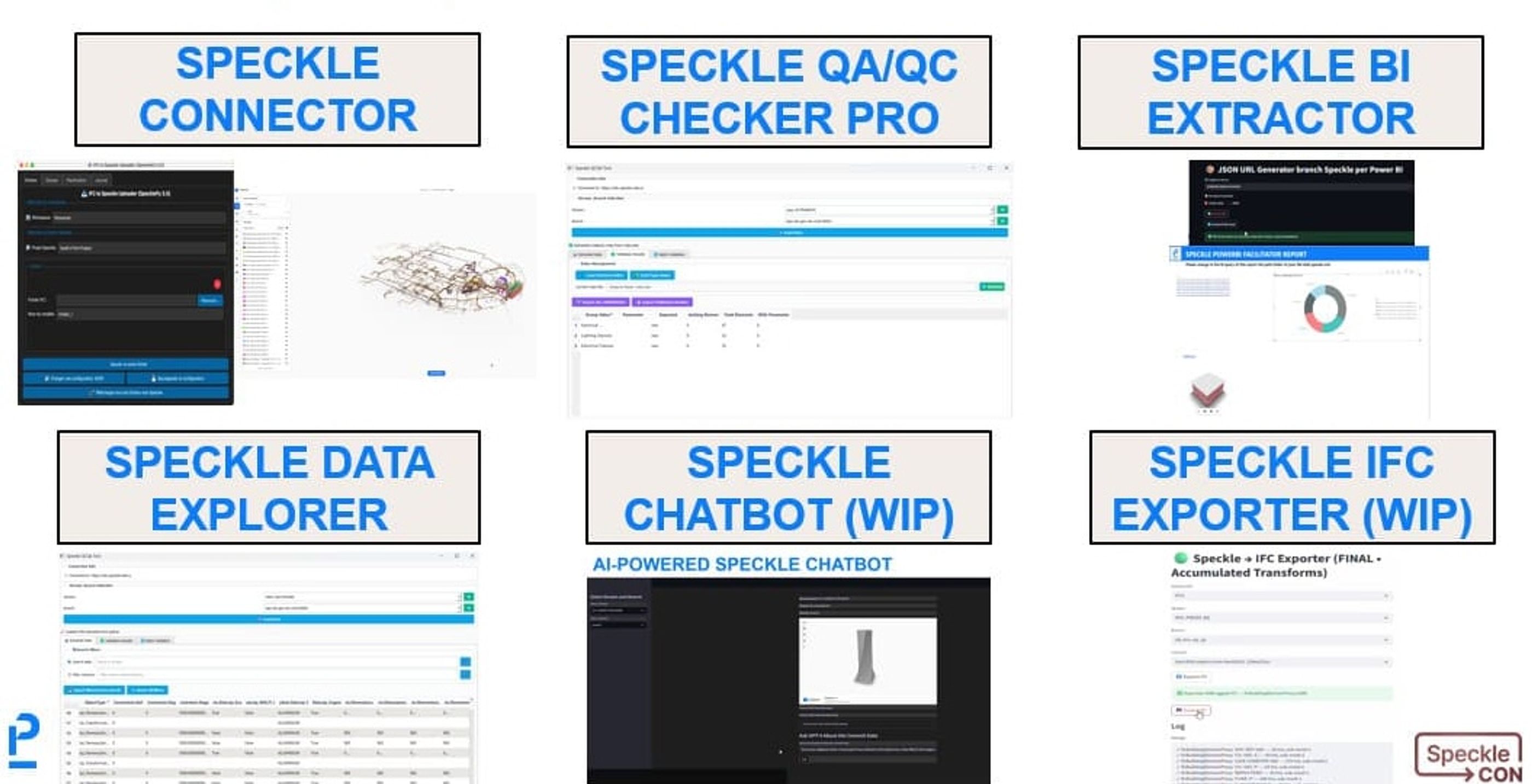
Together, these tools form a modular ecosystem that supports both operational delivery and the progressive definition of enterprise BIM data standards.
The QA/QC Checker Pro: a validation tool for enhanced QA/QC analysis of BIM/VDC models directly in Speckle, ensuring data quality and consistency through automated rule-based analysis. It detects missing or inconsistent parameters and provides clear, actionable reports to support efficient model corrections.
The Speckle BI Extractor: A lightweight tool and BI template to pull structured BIM data directly from Speckle, streamlining data flows and batch federation! The tool securely connects to your Speckle server and projects, extracts BIM elements and metadata, and organizes the information into a clean, tabular format. This structured data is then ready for efficient analysis, reporting, and integration.
Within weeks, the team was releasing new internal tools built on Speckle, sometimes one per week, to directly respond to project and field needs.
Results
Speckle played a key role in helping the BIM/VDC team automate, connect, and accelerate critical workflows.
By enabling real-time data exchange between authoring tools, analysis platforms, and custom scripts, Speckle reduced manual handoffs and eliminated many of the repetitive tasks traditionally associated with model coordination. This open, data-centric approach allowed the team to focus less on file management and more on design quality, constructability, and decision-making.
As a result, information flowed more reliably across disciplines, updates were shared instantly, and teams could iterate faster while maintaining a single source of truth throughout the project lifecycle.
| Proces | Before | After | Improvement |
| Equipment tracking | 1–2 weeks (Excel manual and visual comparison) | 2–3 hours | > 90 % faster |
| QA/QC checks | ~ 1 hour (Using Revit Model Checker) | 2–5 minutes | > 90 % faster |
| BI data extraction | 10–30 minutes (Using custom Speckle connector model by model) | < 1 minute | 95 % faster |
| IFC uploads | > 1 hour (Using custom drag and drop function in Speckle) | ~ 40 minutes | 33 % faster |
| Weekly time saved | / | 5–7 hours per user | ≈ 15 % productivity gain |
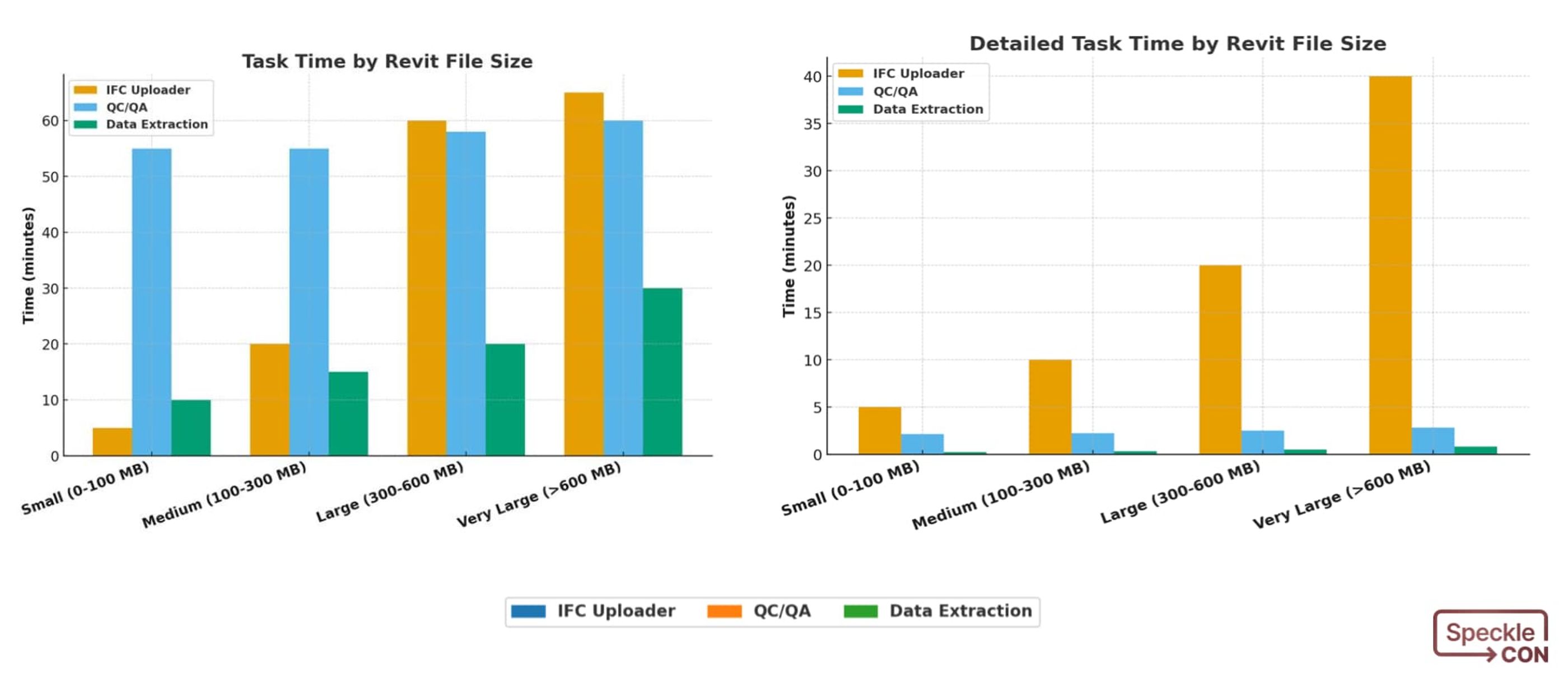
Comparison of Pomerleau's Speckle-powered built solutions: Time gains
Operational improvements
- Around 60 % fewer manual data entries across VDC teams, resulting in improved data quality
- Dashboards are updated daily instead of weekly, meaning decisions are made on current, not stale, data.
- Integrated and streamlined BIM/VDC workflows (i.e., automation reduced auditing of modeled specialized equipment from 2 weeks to about 2 hours, including human validation)
- Increased traceability from model to approval improves audit confidence
Business benefits
- Centralized data architecture achieved with Speckle is at the core of enhancing project information exchange and management for Pomerleau.
- Trivial manual tasks have been automated, license costs for field users have dropped to zero, and insights once buried in files are available on demand.
Future
After successfully validating the value of a self-hosted deployment, Pomerleau is now scaling Speckle at the organizational level by transitioning to Speckle Cloud in the new Canada region. This strategic move reduces infrastructure and maintenance overhead while aligning the platform with enterprise IT standards. It also unlocks access to advanced capabilities such as Speckle Intelligence, Automate workflows, and tighter integration with Autodesk Construction Cloud—further strengthening interoperability across the digital ecosystem.
In parallel, the team continues to expand its internal toolset. An AI-powered chatbot is being developed to allow field and project staff to query model data through natural language, reducing reliance on technical interfaces and accelerating access to actionable information.
The IFC exporter is also being enhanced to support a broader range of geometry representations and metadata structures, ensuring higher fidelity and improved data continuity across systems.
Pomerleau positions Speckle not simply as a platform, but as an open and extensible collaboration framework—one that eliminates silos, reduces repetitive manual effort, and establishes a resilient data foundation capable of supporting automation, analytics, and AI-driven workflows in the long term.
Acknowledgment
This work was made possible through close collaboration between innovation, VDC, and operations teams. Oscar Mannarella, Araham Jesus Martinez Lagunas, and Yazid Ben Said played a key hands‑on role in developing, testing, and applying the Speckle‑based solutions on active projects. From an operations perspective, Cédric Simard was instrumental in identifying and clearly articulating on‑site challenges in model and information management, helping surface concrete problems that could be addressed through a data‑driven approach. At the time, Dragica Adamovic led the initiative as Innovation Manager, structuring discussions and guiding the effort from early ideas through implementation. Fernando Valdivieso supported the initiative at a strategic level, leading discussions with upper management to secure the necessary investment and server infrastructure. More recently, David Vanneck has taken on the responsibility of consolidating these efforts and defining a structured implementation plan to support broader adoption.